
- Elbow Anatomy
- Elbow Conditions
- Elbow Procedures
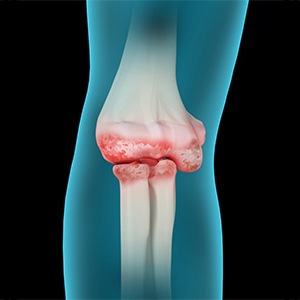
Elbow Arthritis
Although the elbows are not weight-bearing joints, they are considered to be most important for the functioning of the upper limbs. Hence, even minor trauma or disease affecting the elbow may cause pain and limit the movements of the upper limbs. Arthritis is one of the common disease conditions affecting the elbow joint.
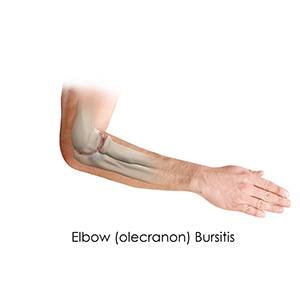
Elbow Osteoarthritis
Elbow osteoarthritis is a degenerative joint disease that affects the elbow, causing the smooth cartilage that lines the ends of the bones (humerus, radius, and ulna) to gradually wear away. This leads to pain, stiffness, swelling, and reduced range of motion in the joint.
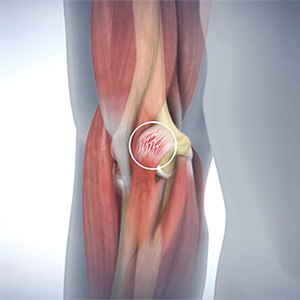
Golfer's Elbow
Golfer’s elbow, also called medial epicondylitis, is a painful condition occurring from repeated muscle contractions in the forearm that leads to inflammation and microtears in the tendons that attach to the medial epicondyle.
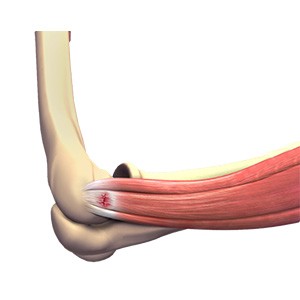
Tennis Elbow
Tennis elbow is a common name for the elbow condition lateral epicondylitis. It is an overuse injury that causes inflammation and microtears of the tendons that attach to the lateral epicondyle. Tennis elbow is a painful condition occurring from repeated muscle contractions at the forearm. The condition is more common in sports activities such as tennis, painting, hammering, typing, gardening and playing musical instruments.
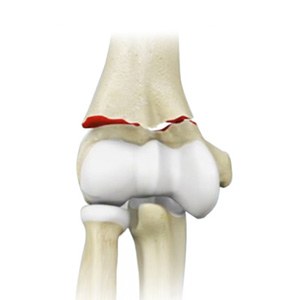
Elbow Fractures
Elbow fractures may occur from trauma, resulting from various reasons: a fall on an outstretched arm, a direct blow to the elbow or an abnormal twist to the joint beyond its functional limit.
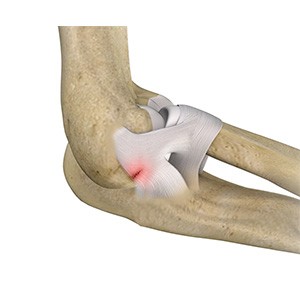
Elbow ligament injuries
Elbow ligament injuries are injuries to the tough elastic tissues that connect the bones of the elbow joint to each other. These ligaments stabilize the elbow while allowing an appropriate joint range of motion to occur. An acute or chronic injury to the elbow ligament can result in joint laxity and loss of elbow function.
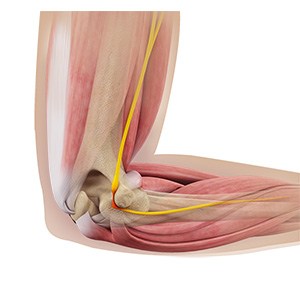
Cubital Tunnel Syndrome (Ulnar Nerve Entrapment)
When the elbow is bent, the ulnar nerve can stretch and catch on the bony bump. When the ulnar nerve is compressed or entrapped, the nerve can tear and become inflamed, leading to cubital tunnel syndrome.

Elbow Stiffness
Elbow stiffness is a condition characterized by a restricted range of motion of the elbow causing difficulty bending, straightening, or rotating your arm. Elbow stiffness may be caused due to injury, disease, or deformity.
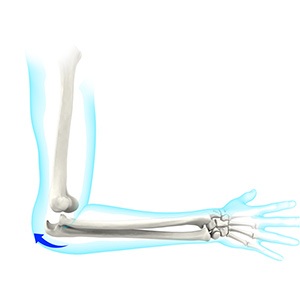
Elbow Instability
Elbow instability is a condition in which the elbow joint occasionally slides out of alignment due to the unstable state of the joint.
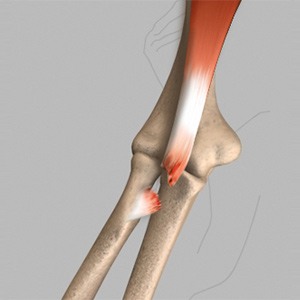
Bicep Tendon Tear at the Elbow
A biceps tear can be complete or partial. Partial biceps tendon tears will not completely break the tendon while complete tendon tears will break the tendon into two parts. Tears of the distal biceps tendon are usually complete and the muscle is separated from the bone. Tears of the distal biceps tendon most often result from a sudden injury or lifting a heavy object.
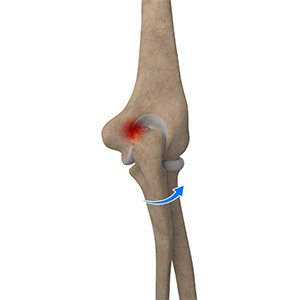
Elbow Impingement
Elbow impingement is a medical condition characterized by compression and injury of soft tissue structures, such as cartilage, at the back of the elbow or within the elbow joint. It is a condition caused by repetitive forced extensions and overuse of the elbow. It can either occur in isolation or as valgus extension overload syndrome - also known as pitcher’s elbow - commonly noted in athletes in overhead-throwing sports like baseball, football, volleyball, and tennis. It can also result from gymnastics and aggressive weight-lifting.
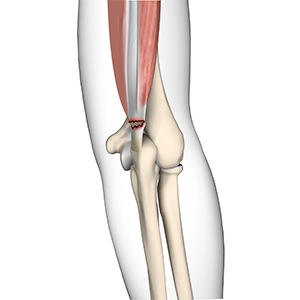
Triceps Injuries
The triceps or triceps brachii is a crucial muscle of the upper arm (humerus). It runs along the upper arm bone between the shoulder and elbow. The triceps tendons connect the triceps muscles to the shoulder blade and elbow in your arm. Tendons are strong bands of tissue that attach muscle to bone. A triceps injury is damage to the tendon that attaches the triceps muscle at the back of your upper arm to the shoulder blade and elbow bone. The triceps functions by allowing extension and retraction of the arm and stabilizing the shoulder joint.
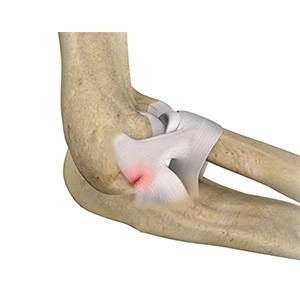
Ulnar Collateral Ligament (UCL) Injury
The ulnar collateral ligament (UCL), also called the medial collateral ligament, is located on the inside of the elbow and connects the ulna bone to the humerus bone. It is one of the main stabilising ligaments in the elbow especially with overhead activities such as throwing and pitching. When this ligament is injured or torn, it can end a professional athlete’s career unless surgery is performed.
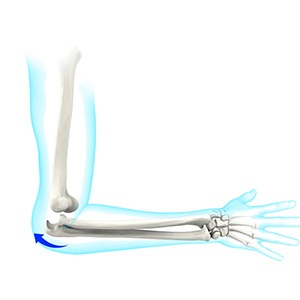
Elbow Dislocation
The arm in the human body is made up of three bones that join to form a hinge joint called the elbow. The upper arm bone or humerus connects from the shoulder to the elbow to form the top of the hinge joint. The lower arm or forearm consists of two bones, the radius, and the ulna. These bones connect the wrist to the elbow forming the bottom portion of the hinge joint.
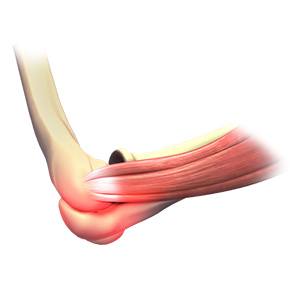
Elbow Sprain
An elbow sprain is an injury to the soft tissues of the elbow. It is caused due to stretching or tearing (partial or full) of the ligaments that support the elbow joint.
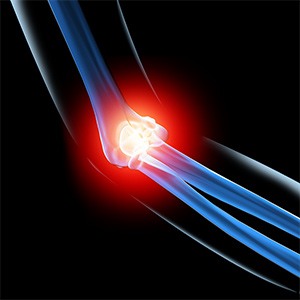
Elbow Injuries
The elbow is a complex joint formed by the articulation of three bones – the humerus, radius, and ulna. Articular cartilage lines the articulating regions of the humerus, radius, and ulna. It is a thin, tough, flexible and slippery surface that acts as a shock absorber and cushion to reduce friction between the bones. The bones of the elbow are supported by ligaments, tendons, muscles, nerves and blood vessels.